
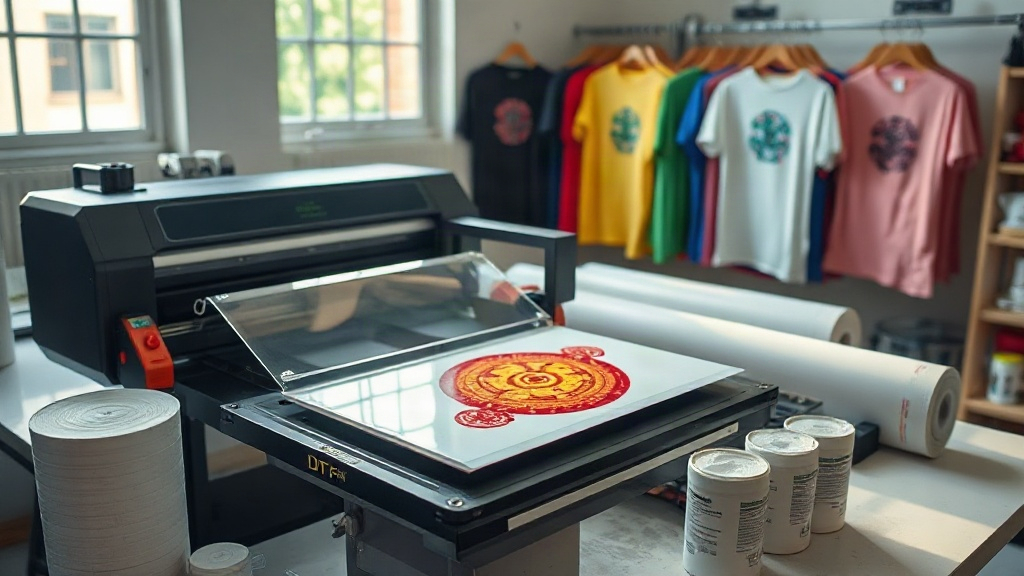
If you run a small apparel or promotional products business, you've likely heard about DTF printing. It's a game-changer for customizing t-shirts, hoodies, and more. But what exactly is DTF, and why is it taking the industry by storm? In this guide, we'll break down the process, benefits, and practical tips so you can decide if it's right for your business.
What Is DTF Printing?
DTF stands for Direct to Film. It's a printing method where your design is printed onto a special film, coated with adhesive powder, and then heat-pressed onto fabric. Unlike DTG (Direct to Garment) or screen printing, DTF works on a wide range of materials, including cotton, polyester, blends, and even nylon. That versatility is a major reason small shops are switching to DTF.
How Does the DTF Process Work?
The DTF workflow has four main steps: designing, printing, powdering, and pressing. Let's walk through each.
1. Design and Print
First, you create your artwork in software like Photoshop or Illustrator. Then, you print it onto a PET film using a DTF printer with specialized inks. The printer lays down a layer of white ink as a base, followed by the colors. This white base is crucial for vibrant results on dark fabrics.
2. Powder Application
While the ink is still wet, you sprinkle a hot-melt adhesive powder over the film. The powder sticks to the ink. After shaking off the excess, you cure the film in an oven or with a heat gun until the powder melts and forms a smooth, dry layer. This adhesive is what bonds the design to the fabric.
3. Heat Pressing
Finally, you place the film onto your garment with the design facing up, and press it with a heat press at around 300-320°F for 10-15 seconds. After pressing, you peel off the film while it's hot or cold, depending on the film type. The result is a durable, stretchable print that feels soft to the touch.
Why Choose DTF for Your Business?
There are several reasons why DTF printing is ideal for small businesses and startups.
- No minimums: You can print one-off designs without setup costs, perfect for custom orders.
- Material versatility: Works on cotton, polyester, blends, leather, and more.
- Vibrant colors: The white base makes colors pop on dark garments.
- Durability: Prints withstand repeated washing without fading or cracking.
- Cost-effective: Lower initial investment compared to DTG or screen printing.
DTF vs. Other Printing Methods
How does DTF stack up against DTG and screen printing? Here's a quick comparison.
DTF vs. DTG
DTG prints directly onto the garment, so it only works well on 100% cotton. DTF can handle any fabric and often produces more vibrant colors on dark shirts. However, DTG may feel slightly softer for light-colored cotton tees. For versatility, DTF wins.
DTF vs. Screen Printing
Screen printing is cost-effective for large orders but requires setup and minimums. DTF shines for small batches and complex designs with gradients. If you offer personalized products, DTF gives you flexibility without inventory risk.
Getting Started with DTF Printing
Ready to add DTF to your services? Here's what you'll need:
- DTF printer: Options range from desktop models to industrial machines.
- DTF inks: Special pigment inks designed for film printing.
- PET film: Available in rolls or sheets; choose the right thickness.
- Adhesive powder: Hot-melt powder for bonding.
- Heat press: A reliable press with even pressure and temperature control.
- Curing oven or heat gun: To melt the powder.
Start with a starter kit if you're on a budget. Many suppliers offer bundles that include everything you need to begin.
Tips for Success with DTF
To get the best results, keep these tips in mind:
- Use high-quality film: Cheap film can cause ink bleeding or poor adhesion.
- Control humidity: Moisture affects powder application; aim for 40-60% humidity.
- Test your press settings: Every fabric behaves differently; adjust time, temperature, and pressure.
- Store prints properly: Keep unused film in a cool, dry place to avoid clumping.
- Wash inside out: Advise customers to wash garments inside out in cold water to extend print life.
Frequently Asked Questions
How long does a DTF print last?
With proper care, a DTF print can last 50+ washes without fading or cracking. It's comparable to screen printing in durability.
Can I use DTF on 100% polyester?
Yes, DTF works great on polyester, including performance fabrics. The low pressing temperature prevents dye migration, but you may need a lower temperature or a barrier sheet for some polyesters.
What's the cost per print for DTF?
Costs vary based on design size and materials. On average, a letter-sized DTF transfer costs $1-$3, making it affordable for small runs.
Do I need a special printer for DTF?
Yes, you need a printer that uses DTF inks and can handle PET film. Some converted inkjet printers work, but dedicated DTF printers are more reliable.
Is DTF better than vinyl?
For complex, multi-color designs, DTF is superior because it doesn't require weeding and can handle fine details. Vinyl is better for simple one-color designs.
With its versatility and low barrier to entry, DTF printing opens up new possibilities for small businesses. Whether you're offering custom tees or expanding into promotional products, DTF can help you deliver high-quality results without breaking the bank. Give it a try and see how it transforms your offerings.